
16Purrsonalities Team·May 20, 2026·9 min read
Cat Personality Types: The 5 You'll Actually Recognize
Researchers identified five core personality dimensions in cats — and once you know them, you'll spot your own immediately. Here's what each one looks like to live with.
Most cat owners can describe their cat's personality in one sentence. The science can do it in one word.
In 2017, researchers at the University of South Australia surveyed owners of 2,802 cats across 52 personality traits and found five stable dimensions that account for most of the variation between cats. They called it the Feline Five. The five factors — Neuroticism, Extraversion, Dominance, Impulsiveness, and Agreeableness — aren't five different types of cats. Every cat has all five dimensions, just in different amounts. But most cats have one or two that dominate, and that dominant flavor shapes everything: how they react to strangers, how they handle stress, whether they're a one-person cat or everybody's friend.
Once you know the five, you'll recognize your cat immediately. And probably a few cats you've loved in the past.
For a deeper look at how the science behind these dimensions was built, we've covered that elsewhere. Here, we're focused on what the types actually look like in practice.
The Nervous One
High-Neuroticism cats are anxious, insecure, and easily spooked. They're not broken or traumatized — though a difficult early life can amplify this trait. They're simply wired to perceive the world as more threatening than it is.
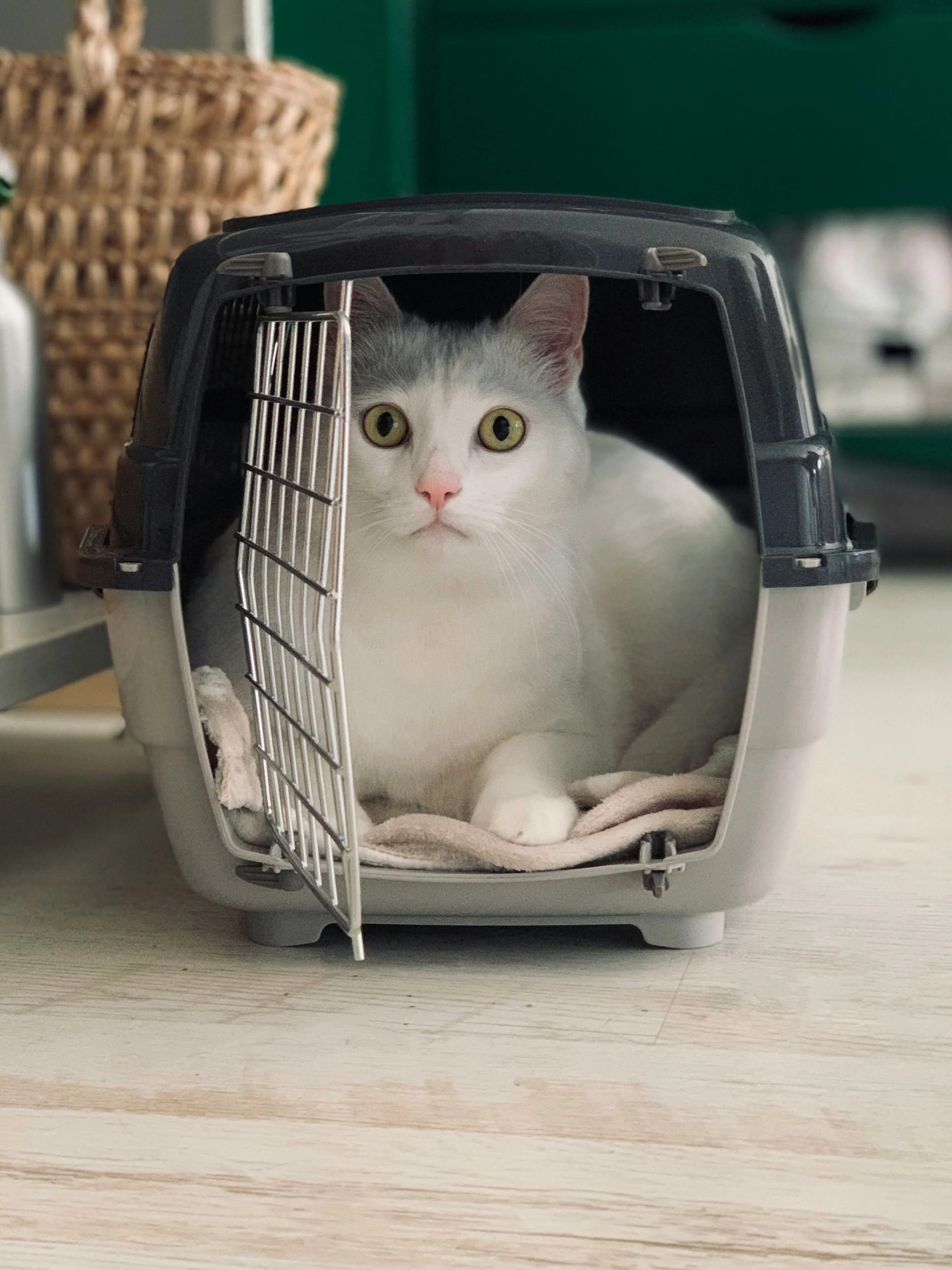
You know this cat. They vanish when the doorbell rings. They take four days to emerge after you rearrange the furniture. They startle at sounds that other cats sleep through, find vet visits genuinely distressing, and may be permanently suspicious of anyone who isn't you. If you have guests over regularly, they've probably never met your cat.
High Neuroticism isn't the same as being unfriendly. Many anxious cats are deeply bonded to one or two people and completely avoidant of everyone else. The bond is real — they just express it in a quieter, more selective way.
What they need: Predictability above everything. Stable routines, reliable feeding times, the same layout in the same rooms. Multiple hiding spots so they always have an exit. Never forcing interaction with strangers. Understanding that "getting used to it" is not a strategy that works for genuinely anxious cats — they need management, not exposure therapy.
Within the 16 Purrsonalities framework, high-Neuroticism cats often show up as types like The Shadow or The Scholar — introverted, observant, deeply loyal to a small circle.
The Explorer
High-Extraversion cats are curious, active, vocal, and perpetually in the middle of whatever is happening. They're not just present — they're involved. They meet you at the door. They sit on your laptop. They have opinions about what you're eating and are not shy about expressing them.
This is the cat who investigates every grocery bag within thirty seconds of it hitting the counter. The one who greets your friends before you do. The one who, upon discovering a new room has been unlocked, treats it as a personal achievement requiring immediate and thorough exploration.
High-Extraversion cats tend to be easy to read. They want stimulation, they want interaction, and when they're not getting enough of either, they find creative ways to get it. The 3am sprinting that seems random is often just a cat who spent the day understimulated.
What they need: More than you might expect. Rotating toys so novelty doesn't wear off. Puzzle feeders. Regular active play sessions — not a wand toy waved halfheartedly while you watch TV, but actual engagement. Window perches with a useful view. For very high scorers, consider a second cat. The stimulation need is real, and an Explorer with nothing to do is an Explorer causing problems.
In the 16 Purrsonalities framework, these are the extraverted types: The Clown, The Rebel, The Ham. Always on, always social, always ready to participate in whatever's happening.
The Boss
High-Dominance cats are assertive, territorial, and acutely aware of social hierarchy. In a single-cat household, this often goes unnoticed — the cat owns everything and there's no one to contest it, so they're simply confident and self-assured. In multi-cat households, it becomes very visible, very fast.
The Boss controls the food bowl. The Boss decides who sleeps where. The Boss communicates with sustained eye contact and slow, deliberate movement rather than aggression — though aggression is available if the message isn't received. Other cats learn quickly to yield.
This isn't necessarily a problem. A high-Dominance cat isn't a bully by default — they're a cat with a strong preference for knowing where they stand. The issue arises when two high-Dominance cats share a space without enough resources, territory, or separation to establish their own domains.
What they need: Space and resources scaled to their need for control. Multiple food stations, multiple litter trays, vertical territory so hierarchy can be expressed through height rather than conflict. Careful introductions to new animals — slow, structured, and never forced. A high-Dominance cat paired with the wrong housemate is a stressed household. A high-Dominance cat who is the only cat, or who is clearly the alpha in a settled hierarchy, is usually fine.
In the 16 Purrsonalities framework, these cats tend to map to the more assertive, strategic types: The CEO, The Dictator.
The Wildcard
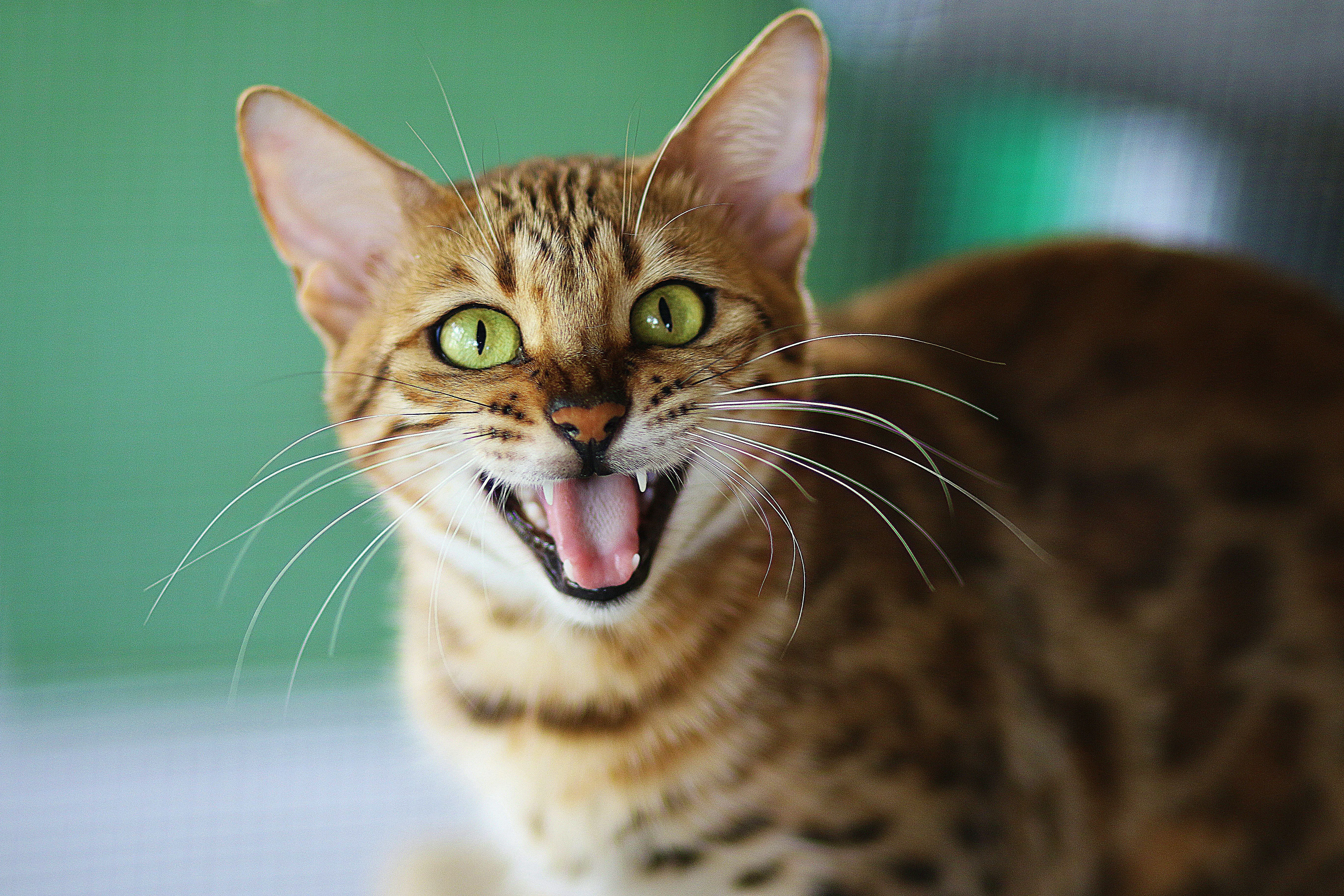
High-Impulsiveness cats are unpredictable in a specific, frustrating way: they react differently to the same situation on different days. You pet them in the same spot you pet them every day, and today they bite you. You offer the same toy that delighted them yesterday, and today they're completely indifferent. You try to pick them up and they either melt into you or levitate out of your arms — and there's no reliable way to know in advance which it will be.
This is the cat that makes people say "she's crazy." She's not crazy. She just scores high on Impulsiveness.
The 2017 Feline Five study found something worth knowing: unlike in humans, where impulsive behavior tends to cluster with Neuroticism (anxious people acting out), in cats, Impulsiveness emerged as its own independent factor. An anxious cat can be completely consistent and predictable. A confident, calm cat can be completely erratic. The two aren't connected in the way most people assume.
High Impulsiveness can also be a stress signal. Cats showing sudden increases in unpredictable behavior — especially if it's new — are sometimes responding to something in their environment. Worth noting if the change is recent.
What they need: Patience, and owners who don't take the biting personally. Reading body language closely helps — the pre-bite flick of the tail or flattening of ears often telegraphs what's coming. Short petting sessions. Letting the cat initiate. And if the impulsiveness is new, a vet check to rule out pain or environmental stress.
In the 16 Purrsonalities framework, high Impulsiveness cuts across types rather than mapping neatly to one — it tends to show up as an edge on otherwise familiar personalities, making them harder to read than you'd expect.
The Sweetheart
High-Agreeableness cats are friendly, gentle, and easy to be around. They're the ones who get described as "dog-like." They come when called, tolerate handling without complaint, and greet strangers with a raised tail and a friendly trill rather than a hasty exit.
This is the cat who falls asleep in your lap on the first meeting. Who is somehow fine at the vet. Who coexists peacefully with the dog, the kids, and the new kitten without requiring a three-week structured introduction protocol. Who has never, to anyone's knowledge, hidden under a bed.
High-Agreeableness cats are genuinely easy. They adapt to change better than most, tolerate disruption more gracefully, and generally seem to find the world a less threatening place. They're not low-energy or passive — Agreeableness is about social warmth, not activity level. An agreeable cat can also be an Explorer or a Wildcard. The combination is a cat who is simultaneously delightful and exhausting.
What they need: Connection. These cats thrive on interaction and can genuinely suffer when left alone for long stretches. If you work long hours, a second cat is worth considering — a high-Agreeableness cat usually integrates well and benefits from the company. They're the cats most likely to be truly unhappy in an under-stimulating environment, not because they're anxious, but because they're social and genuinely enjoy company.
In the 16 Purrsonalities framework, the warmest, most people-oriented types map here: The Prince, The Ham, The Caregiver.
Most cats are a combination — and that's where it gets interesting
Very few cats are purely one flavor. The Feline Five are dimensions on a spectrum, not boxes to sort cats into — every cat scores on all five, and the interesting information is in how those scores combine.
A cat who is high in both Neuroticism and Extraversion is curious and active but also anxious — the cat who explores everything enthusiastically and then gets startled by what they find. A cat high in Dominance and Agreeableness is warm and social but also quietly in charge — the cat who bonds deeply with you and also runs the household. A cat high in Impulsiveness and Extraversion is a lot. A very specific, memorable kind of a lot.
The combinations are why two cats with the same "dominant type" can feel so different to live with. They're working with the same primary ingredient but in different ratios with everything else.
This is also why the 16 Purrsonalities framework uses sixteen types rather than five. The quiz maps your cat across four dimensions — including where they sit on the Extraversion axis — and produces a specific profile that captures more of the combinations that matter in practice. If you've read through the five types above and found yourself saying "yes, but also..." more than once, that's the point. The quiz takes about three minutes and gives you the full picture.
You probably already knew what kind of cat you have. You've lived with them. The science just gives you language for it — and occasionally explains the biting.
For more on the research behind why these personality patterns are real and stable, the science holds up better than most people expect. And if you want to see what the full 16 types look like in practice, they're all here.
Keep reading
8 min read · May 2026
Are Cats Introverts or Extroverts? Science Has a Real Answer
The introvert/extrovert instinct you have about your cat is probably right. Here's what 40 years of feline personality research says — and one key way it works differently than it does for humans.
8 min read · Apr 2026
The Science Behind Cat Personality Tests (And Why It Actually Holds Up)
Cat personality tests seem like internet fluff — but a study of 2,802 cats and a peer-reviewed experiment using infant psychology says otherwise. Here's what the science actually found.
8 min read · Apr 2026
Why Is My Cat So Talkative? The Science of the Meow
Adult cats don't meow at each other — they invented it for us. Here's the science behind why your cat is so vocal, and what they're actually trying to say.
Show off your cat's purrsonality
Take the quiz to find your cat's type, then wear it proudly.
Cat Personality Type Tee
Soft unisex tee featuring your cat's 16 Purrsonalities type. Available in all 16 types.
Purrsonality Sticker Sheet
A full sheet of illustrated personality type stickers. Great for laptops, water bottles, and cat carriers.
16Purrsonalities
Find out which of the 16 Purrsonalities your cat actually is
The quiz draws on the same personality dimensions the science validates. Takes 3 minutes.
Take the Free Quiz →